In the modern globalized health ecosystem, patients are more than ever in need of authentic medicines, not the fake or substandard ones. The issue of pharmaceutical counterfeiting is a major concern for the health of the population: it causes a loss of trust, ineffective use of resources, and in the most extreme cases, serious injuries or fatalities. One of the global pharmaceutical distributors with operations in the UK has a particular task: it handles cross-border medicines distribution, collaborates with a variety of suppliers and customers, and must ensure supply chain integrity throughout the supply chain.
This article examines how a multinational pharmaceutical distributor in the UK prevents counterfeit medicines through the use of tools, best practices, regulatory frameworks, and measures to ensure customer and patient safety.
The Challenge of Counterfeit Medicines
Falsified (or counterfeit) medicines include drugs that intentionally hide their identity, components, or origins. The most important issues that distributors have to deal with are:
Complexity of the supply chain:
Various levels, such as manufacturers, repackagers, brokers, wholesalers, and logistics providers, complicate tracing to a great extent. Every other layer creates a possible entry point of counterfeit products into the legal supply chain.
Through the internet and grey markets:
The illegal vendors who sell via internet and irregular routes bypass the normal regulatory measures and provide other routes through which counterfeit medicines find their way to consumers.
Weak verification systems:
Some jurisdictions have poor authentication or verification structures, and it is relatively simple for counterfeiters to use the loopholes in the enforcement of regulations and monitoring of the supply chain.
Economic pressures:
Some actors may make risky shortcuts due to margin pressures and lack of medicine that require acceptance of products of unverified origin or they might not do due diligence of suppliers.
Advanced methods of counterfeiting:
Contemporary forgers use sophisticated techniques such as altering original packaging, rebranding expired products, copying serialization numbers and also developing sophisticated repacking that resembles real products.
Since none of the supply chains is hack-proof, sound controls and vigilance will be key in ensuring the pharmaceutical supply chain security.
Regulatory & Industry Frameworks in the UK
An international distributor that is based in the UK has to work within a strict regulation and industry standards. Important frameworks and structures are:
Good Distribution Practice (GDP):
The distributors in the UK are required to meet the GDP standards to maintain storage, transportation and handling of products in such a manner that do not spoil quality and traceability and prevent falsification. These regulations touch on all aspects such as temperature regulation and documentation systems and staff training.
Wholesale Dealer licence (WDL) / Wholesale Distribution Authorisation:
The UK permits licensed entities to supply medicines and their premises, procedures and record keeping are usually inspected by MHRA (Medicines & Healthcare products Regulatory Agency). This licensing system brings about accountability and minimum standards throughout the distribution system.
MHRA Anti-Counterfeiting Regulations and Reporting Systems:
The regulator in UK has extensive programmes to regulate, investigate and take measures on the reports of counterfeit medicines. Pharmacy distributors must report suspicious products as soon as possible and the MHRA organizes investigations and enforcement measures.
Watch Lists of Products at Risk:
Distributors frequently track lists of medicines that are more apt to counterfeiting e.g., high-value oncology drugs, lifestyle drugs and short-supplies. These are additional products that are scrutinized in the chain of supply.
Penalties in the law and loss of the licence:
Should negligence or a failed regulation allow counterfeit medicines to penetrate the supply chain, the distributor will be heavily fined, his or her licence suspended or revoked and may face criminal prosecution.
Due to the UK exiting the EU, its previous involvement in the EU Medicines Verification System has ceased and, therefore, the UK now needs to depend a little more on its domestic systems and new approaches of verification that meet its new, post-Brexit regulatory framework.
Key Anti-Counterfeiting Strategies Employed by the Distributor
A sophisticated global pharma distributor in the UK will combine multiple layers of strategy. Here are the principal ones:
1. Robust Supplier and Customer Qualification (Due Diligence)
All suppliers, manufacturers, brokers, or repackagers will be checked under the strict procedures of dealing with suppliers, evaluating their financial stability, reputation, regulatory status, and audit record. This due diligence is not a one time affair but a relationship management activity.
New or increased suppliers will lead to entirely new re-qualification processes and business can not be initiated. This involves checking of manufacturing licenses, GDP compliance certificates, and recommendations of other trading partners.
Unsolicited offers, too good to be true offers, deal pressure, etc, are automatically classified and dismissed unless strongly verified with independent channels. These red flags usually indicate that there has been diverted or counterfeit stock being sold to the legitimate supply chain.
Customers such as wholesalers and pharmacies are also authenticated, and only verified customers with the appropriate credentials are served. This forms a loop system in which both ends of the distribution chain are verified.
This stringent qualification procedure prevents middlemen who could be fronting counterfeit or diverted stock, as well as making sure that all the links in the supply chain have been sufficiently qualified.
2. Drug Serialization and Traceability Systems
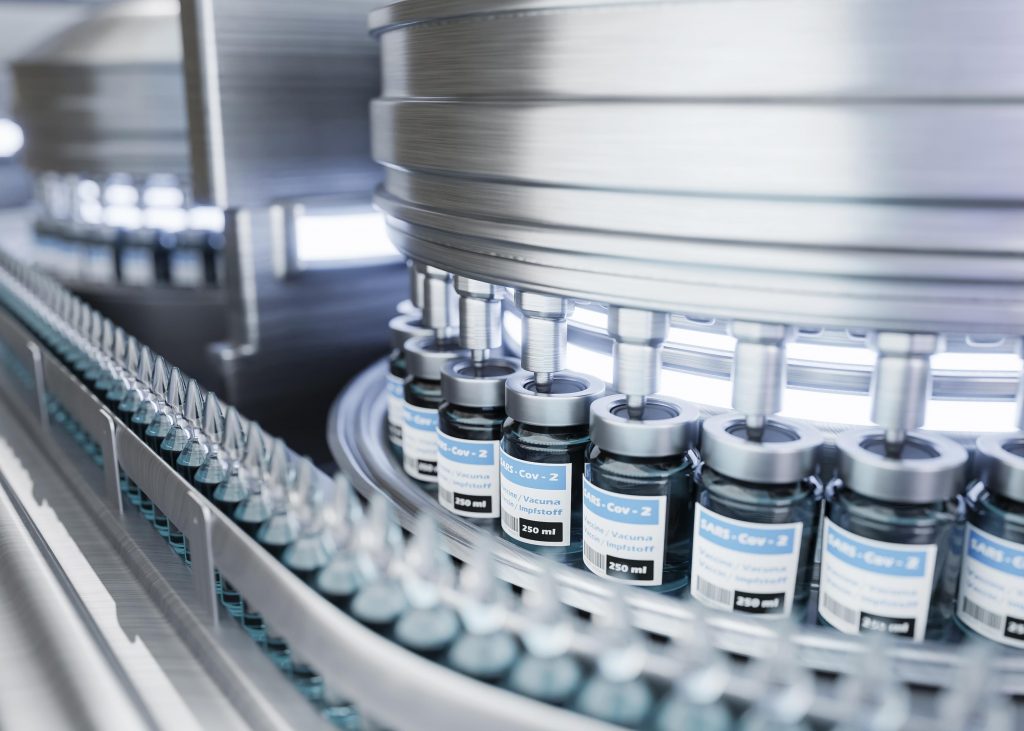
The medicine unit or a package has a unique identifier that is usually a 2D Data Matrix code with a batch number, expiry date, serial number, and the product identifier. This enables scanning and verification downstream throughout the supply chain.
Distributors have developed advanced digital databases, which trace all the actions of that identifier within their internal logistics, and correlate scans with individual shipments, warehouse locations, and time. This generates an entire digital tracking of product movement.
When a code is scanned and discovered to be already decommissioned, previously used or duplicated in other parts of the system, it is automatically rejected and marked as an area of research. This is a real-time check that ensures that fake goods with duplicated codes do not go through the supply chain.
Other advanced-level innovations are blockchain-based traceability systems, cryptographic QR codes that are often difficult to duplicate, and tamper-evident functionality that indicates whether packaging has already been opened or changed.
These mechanisms offer supply chain integrity because anomalies are identified and all product movement can be seen between the manufacturer and the final consumer.
3. Physical & Visual Inspection, Security & Packaging Controls
Special training to the employees to identify suspect package features such as incorrect fonts, substandard print, torn seals, suspect batch numbers, odd tamper seals, and misfit of packaging material or design are provided.
Distribution process is done at controlled conditions of temperature, humidity and storage. These environmental restrictions do not only help in maintaining products quality, but also minimize chances of packaging tampering or degradation that may make counterfeitation easy.
These deliveries are all subject to strict scrutiny. These involve the rejection of deliveries that come in unbranded vehicles or in suspicious ones, checking of driver credentials and documentation and verification of the entire chain of custody since point of origin.
Unnecessary security measures such as holograms, tamper-evident shrink wraps and security seals among other anti-counterfeiting packaging are applied whenever possible. The counterfeiting is not economical due to multiple layers of security that prevent this activity by criminals.
4. Monitoring, Audits & Self-Inspection
Internal audit teams regularly evaluate the compliance with the correct implementation of all processes and reveal any procedural or compliance gaps. These audits encompass all the activities in the warehouse including records of suppliers qualification and handling procedures of the products.
Self-inspection programmes actively spot weaknesses or examples of nonconformance or human error and take corrective and preventive measures. This is a constant improvement strategy that keeps the anti-counterfeiting strategies updated with the changing threats.
Distributors keep watchlists of high-risk goods and review them more frequently, have extra steps of verification, and provide increased security during the storage and transportation.
5. Information Sharing & Collaboration
Distributors also closely work with manufacturers, regulators such as the MHRA, industry associations, and the law enforcement to provide intelligence on new trends on counterfeits, suspicious suppliers, and threats. This team smart strategy solidifies the whole pharmaceutical supply chain.
They are also part of industry bodies and trade associations to harmonize standards, discuss best practices and establish collective protection which is useful to all legitimate participants of the supply chains.
In cases of suspicious products being detected distributors report as quickly as possible to the MHRA through the formal channels such as the Yellow Card scheme and special counterfeit hotlines. Quick reporting facilitates a faster response by the regulators and greater spreading of counterfeited medicines.
6. Consumer & Stakeholder Awareness
Publicity campaigns frequently receive assistance or encouragement by distributors to make the pharmacies and patients aware of how to identify counterfeited medications and what to do in case of reporting. Education is a key to combat counterfeiting because when the stakeholders are educated, they are able to detect and report suspicious products.
End users can prove authenticity by clear labelling, strong tamper-evidence characteristics, and package authentication instructions which help at the end of dispensing or consumption.
There are numerous distributors offering mobile or web-based services including scanning applications, verification portals that enable pharmacies or even patients in checking the legitimacy of the products through scanning or with the help of a batch number.
7. Technology & Emerging Innovations
Blockchain / distributed ledger technology:
Other distributors are experimenting with blockchain systems to develop shared ledgers of product movement that cannot be changed. All transactions and transfers are stored indefinitely and the history produced is one that cannot be changed at all and that makes it extremely hard to counterfeit.
Secured QR / coded codes:
Enhanced QR codes with cryptographic authentication can not be copied or reproduced easily. Only authorized systems can have correct decryption keys to validate these codes.
Zero Trust IT architecture:
The digital backbone of logistics platforms with constant verification of users and systems avoids cyber interference and hacking into the supply chain information.
AI and pattern detection:
State-of-the-art analytics processes are used to analyze distribution information to identify anomalies, suspicious order patterns, and unusual behaviors which can be signs of attempts to counterfeit or to divert.
These hi-tech tools offer extra levels of protection against human observation or procedural checks and use technology to detect threats that would have otherwise remain unnoticed.
Benefits & Outcomes of Counterfeit Medicines Prevention
These combined strategies assist the distributor to attain several key goals when they are put in place appropriately:
Reduce the threat of fake infiltration:
The supply chain has several levels of verification, which render it very hard that counterfeit products could find their way into the supply chain or move through it.
Secure patient safety and reputation:
This is because when distributors verify the authenticity of the products, they not only save the patients against the risk of using potentially harmful counterfeit medicines, but they also guard the reputation of pharmaceutical brands.
Do not violate regulatory enforcement:
Strong anti-counterfeiting will guarantee continued adherence to the regulations of the MHRA and GDP, without the threat of fines and the preservation of operating licenses.
Enhance visibility and auditability of supply chain:
Track-and-trace systems offer total visibility of movement, which allows to quickly investigate any problems, and facilitate regulatory checks.
Quickly identify and isolate suspect inventory:
Potential counterfeits are easily identified and isolated before getting into the circulation before they reach the patients.
Enhance customer confidence and competitive advantage:
Clearly expressed dedication towards supply chain integrity instills confidence among the customers and makes the distributor stand out in the competitive market.
Nevertheless, none of the systems is foolproof. Due to the constant changing nature of the techniques used by counterfeiters and the regular exploitation of new loopholes, constant vigilance, regular re-examination, and constant innovation are necessary.
Challenges & Limitations
Although there are advanced anti-counterfeiting tools, there are considerable problems:
Cost & complexity:
Serialization infrastructure, sophisticated IT systems, comprehensive audit programs, and safe packaging technologies are highly expensive to implement, both in terms of capital outlays and the costs of operation and maintenance.
Interoperability & legacy systems:
In order to have traceability systems coordinated among various parties such as manufacturers, logistics providers and pharmacies, there are technical problems especially in the case of legacy systems, which were not created with the current need of verification.
Jurisdictional gaps:
Other countries or regulatory controls of certain areas of the supply chain can be less effective, which forms weak links through which counterfeit products can find their way into the global supply chain with ease.
Counterfeiter sophistication:
Criminal gangs are evolving more complex ways of duplicating codes, stealing legitimate shipments, breaking into verification systems or packaging that is very similar to authentic products.
Consumer behavior:
By buying medicines through unlicensed online sources or unregulated channels, patients will totally bypass the controlled supply chain exposing themselves as well to counterfeits and damaging legitimate distribution channels.
So, the distributor needs to constantly strike the balance between the extensive risk reduction and the viability of operation and cost-effectiveness.
Conclusion
Preventing falsified medicines in supply chain is not a one-time endeavor but a multi-layered multi-level process whose main aim is to stay focused and keep evolving. In order to ensure supply chain integrity, a global pharmaceutical distributor based in the UK should ensure a combination of adherence to strict regulatory requirements, supplier and customer screening, coupled with the use of sophisticated serialization and traceability systems, physical inspection, periodic audits, stakeholders awareness campaigns and emerging technologies.
Through such an integrated approach, distributors can help to protect the health of the patients, defend the pharmaceutical brands and ensure regulatory compliance as well as make the global medicines environment safer. The combating of counterfeit medicines demands the cooperation of the whole pharmaceutical industry, both manufacturers and distributors, regulators, health professionals and even the patients.
Due to the continuous development of counterfeiting techniques, the techniques used to fight them should also evolve. On-going technological, training and intelligence-sharing will continue to be important in keeping ahead of criminals who pose as a threat to the health of the people by distributing counterfeit medicines.