
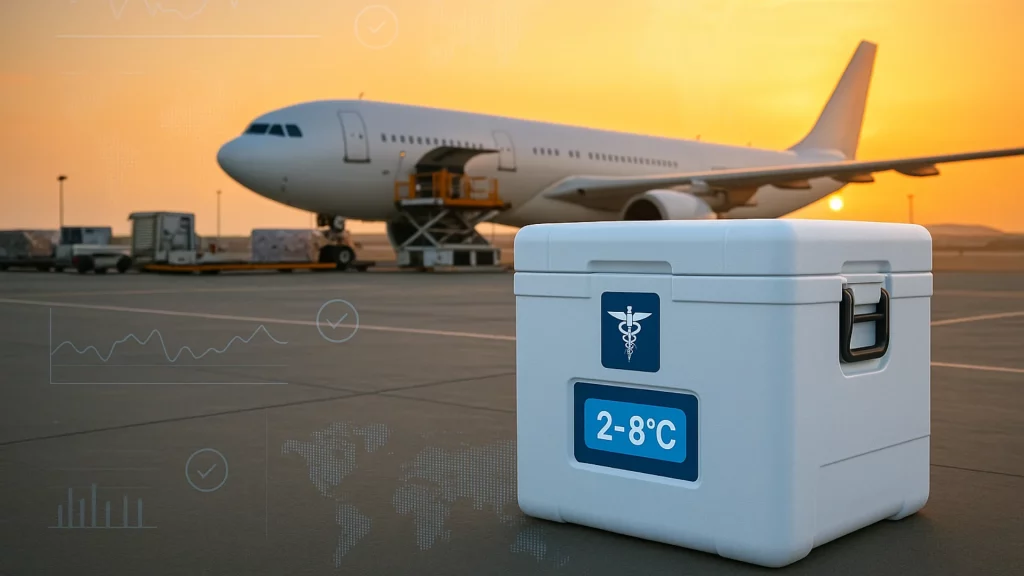
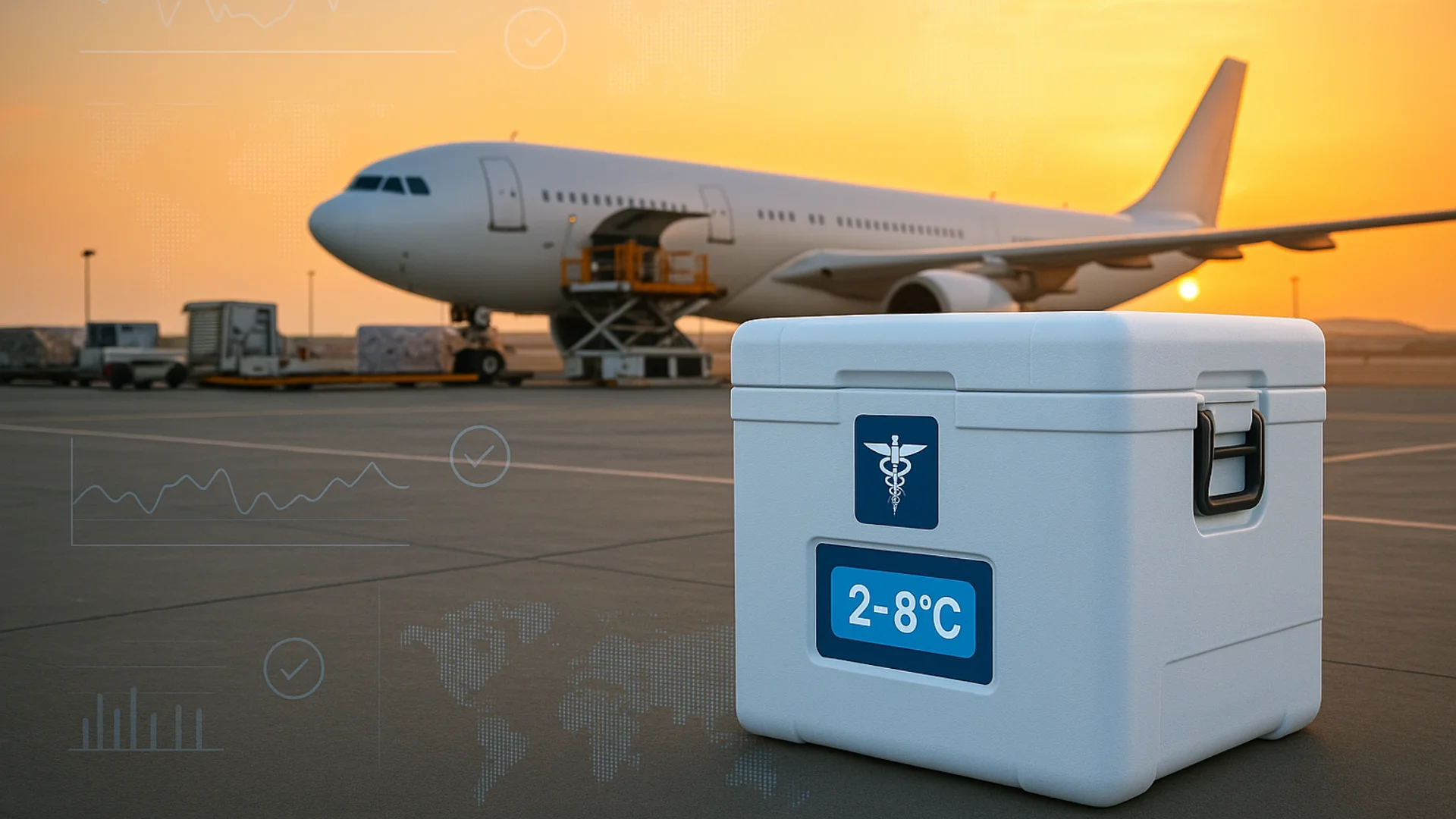
Maintaining 2–8°C Pharmaceutical Integrity Across Africa’s High-Temperature Environments
Introduction
Operating pharmaceutical cold chain systems across tropical Africa demands precision beyond standard temperature control. Ambient temperatures routinely reaching 26–38°C, combined with variable infrastructure and extended transit routes, create conditions where medicine integrity depends on validated monitoring, redundant systems, and documented verification at every handoff point.
At Global Pharma Distributor (GPD), our MHRA-licensed UK facility dispatches temperature-sensitive pharmaceuticals under Good Distribution Practice (GDP) frameworks specifically designed for high-temperature corridor management. Every export destined for Kenya, Uganda, Tanzania, and broader East African markets operates through validated cold chain protocols that maintain 2–8°C integrity from our controlled warehouse environment through tropical delivery conditions.
This operational overview demonstrates GPD’s cold chain methodology, not as a tutorial on temperature control principles, but as evidence of the systems, monitoring infrastructure, and verification processes we deploy across Africa’s most demanding climate zones.
The Temperature Challenge in East African Pharmaceutical Distribution
Climate Realities Across Key Markets
East Africa’s pharmaceutical import corridors present distinct thermal management challenges that standard European cold chain systems cannot address without modification.
Kenya’s temperature profile: Nairobi maintains year-round averages of 18–26°C at elevation, but coastal entry points like Mombasa experience 24–32°C with high humidity. Pharmaceuticals clearing customs at Jomo Kenyatta International Airport face temperature fluctuations during ground handling that can exceed 35°C during peak daylight hours.
Uganda’s inland conditions: Entebbe International Airport and Kampala’s distribution centers operate in consistent 21–28°C ranges, but last-mile delivery to regional health facilities involves road transport through areas where cabin temperatures in non-refrigerated vehicles can reach 40°C.
Tanzania’s coastal-to-interior gradient: Dar es Salaam port operations encounter 26–33°C ambient temperatures with extreme humidity. Pharmaceutical shipments moving inland to Dodoma, Arusha, or Mwanza traverse varied elevation zones where temperature management requires continuous monitoring and adaptive cooling.
These conditions create three critical risk points where medicine quality degrades if cold chain breaks occur: customs clearance delays, ground transport between facilities, and temporary storage in non-GDP-compliant warehousing.
Why 2–8°C Integrity Is Non-Negotiable
Temperature-sensitive pharmaceuticals, vaccines, biologics, insulin, certain antibiotics, and diagnostic reagents, lose efficacy through thermal exposure that occurs cumulatively. A single two-hour excursion to 12°C may not destroy a vaccine, but repeated fluctuations during transit create compounding degradation that renders products ineffective by the time they reach end users.
Regulatory authorities including the Pharmacy and Poisons Board (PPB) in Kenya and equivalent bodies across East Africa require documented proof that imported pharmaceuticals maintained specified temperature ranges throughout the supply chain. Without continuous monitoring data and validated packaging performance, shipments face rejection, disposal, or, worse, distribution of compromised medicines.
GPD’s cold chain systems exist to eliminate these risks through engineering controls, real-time monitoring, and documented verification that provides regulatory bodies and importers with irrefutable evidence of temperature compliance.
GPD’s Validated Cold Chain Infrastructure
Pre-Dispatch Temperature Stabilization
Every pharmaceutical export begins in GPD’s MHRA-licensed UK warehouse, where products are stored in GDP-compliant cold rooms maintaining precise 2–8°C environments with ±0.5°C tolerance. Before dispatch preparation, all products undergo temperature equilibration for a minimum of 12 hours, ensuring internal product temperatures stabilize within the target range before packaging begins.
This pre-conditioning eliminates thermal shock, a common cause of cold chain failure where products stored at proper temperatures are immediately exposed to packaging materials at ambient temperature, creating condensation and localized warming.
Thermal Packaging Selection and Validation
GPD employs validated thermal shipping containers engineered specifically for tropical corridor performance. These systems differ fundamentally from standard pharmaceutical packaging designed for European or North American routes.
Passive cooling systems for 48-96 hour transit: Phase-change materials (PCMs) pre-conditioned to 2–8°C provide thermal buffering without active refrigeration. Container walls use vacuum-insulated panels (VIPs) that maintain thermal barriers even when exterior surfaces reach 45°C. Internal temperature mapping studies demonstrate these containers hold 2–8°C integrity for 96 hours at 35°C ambient, covering typical UK-to-East Africa air freight durations plus ground transport delays.
Active monitoring integration: Each container includes calibrated data loggers positioned at thermal risk points (top center, bottom corners, door-adjacent zones) that record temperature readings every 2 minutes throughout transit. These loggers generate tamper-evident digital records that regulatory authorities can download and verify independently.
Backup power redundancy: For shipments requiring active refrigeration during extended ground transport, GPD coordinates with logistics partners using vehicles equipped with dual power sources, primary vehicle electrical systems plus independent battery backups that maintain refrigeration during engine-off periods at customs facilities or overnight staging.
Documentation and Traceability Protocols
Every cold chain shipment includes:
Pre-shipment temperature verification certificates documenting that all products were within 2–8°C range for the 12-hour period preceding packaging.
Thermal packaging validation reports showing the specific container model used, its validated performance duration, and the PCM conditioning temperature recorded before packing.
Continuous temperature logs from all data loggers, downloadable in CSV and PDF formats for regulatory review.
Photographic evidence of packaging integrity at key handoff points, warehouse departure, airport cargo acceptance, destination customs receipt, creating a visual audit trail.
This documentation framework transforms cold chain performance from assumed compliance into verifiable evidence, giving importers in Kenya, Uganda, and across East Africa the regulatory-grade proof their authorities require.
Real-Time Monitoring and Intervention Protocols
Temperature Tracking Technology Deployment
GPD’s cold chain monitoring extends beyond passive data logging to active alert systems that enable intervention before temperature excursions cause product loss.
4G/5G-enabled tracking devices embedded in high-value shipments transmit location and temperature data in real-time. When containers approach temperature threshold limits (typically 7.5°C upper boundary or 2.5°C lower boundary), automated alerts notify both GPD’s logistics team and the receiving importer simultaneously.
Geofencing and dwell-time monitoring tracks shipment location against planned routing. If a container remains stationary at a non-approved location (indicating potential customs delay or misrouting), alert protocols trigger immediate investigation. For Kenya-bound shipments, GPD coordinates with Nairobi-based freight forwarders who can physically verify container status and arrange expedited clearance when delays threaten cold chain integrity.
Intervention Response Framework
When temperature alerts occur, GPD’s response protocol operates through three escalation levels:
Level 1 (Yellow Alert: 7.0–7.5°C): Logistics team contacts carrier and destination facility to verify container location and expected delivery timeline. If delivery will occur within 4 hours, shipment continues with enhanced monitoring frequency increased to 30-second intervals.
Level 2 (Orange Alert: 7.5–8.5°C): Container diverted to nearest GDP-compliant cold storage facility for PCM replenishment or transfer to replacement packaging. Product integrity assessment conducted by qualified pharmacist using temperature exposure duration calculations. Shipment may proceed if excursion was brief and product-specific stability data supports continued use.
Level 3 (Red Alert: >8.5°C or <2.0°C): Immediate shipment quarantine. Products undergo full stability testing or are destroyed per GDP protocols. Regulatory notification initiated to Kenya PPB, Uganda National Drug Authority, or relevant importing authority. Root cause analysis completed within 48 hours and mitigation implemented before subsequent shipments.
This tiered system enables rapid response while maintaining regulatory compliance and product safety as absolute priorities.
Infrastructure Coordination Across East African Corridors
Airport and Port Logistics Integration
Successful cold chain performance in tropical climates requires coordination with ground handling providers who understand pharmaceutical-specific requirements.
Kenya corridor optimization: GPD works with freight forwarders operating dedicated pharma handling facilities at Jomo Kenyatta International Airport, where climate-controlled cargo zones maintain 15–20°C environments during customs processing. Shipments clear through dedicated pharmaceutical customs lanes that prioritize temperature-sensitive cargo, reducing typical clearance times from 48 hours to 8-12 hours for pre-approved importers.
Uganda routing strategy: Direct flights to Entebbe reduce transit time, but limited cargo capacity often requires routing through Nairobi with same-day connection to Kampala. GPD’s booking protocols specify maximum connection windows (4 hours) and require airline confirmation of refrigerated cargo hold assignment on both flight segments.
Tanzania port considerations: Pharmaceuticals entering via Dar es Salaam port face longer clearance durations due to higher cargo volumes. GPD coordinates with Tanzania-licensed importers to complete advance documentation filing (pre-clearance of shipment details 72 hours before arrival), enabling immediate container release to importer-controlled cold storage upon port arrival.
Last-Mile Delivery Support
The final delivery segment, from capital city importers to regional health facilities, represents the highest cold chain failure risk due to infrastructure variability.
GPD provides importers with validated cool box systems and temperature monitoring protocols suitable for motorcycle and small vehicle transport commonly used in rural areas. These systems maintain 2–8°C integrity for 24-48 hours without external power, sufficient for same-day or next-day delivery to district health centers.
Training documentation accompanies these systems, demonstrating proper PCM conditioning, product loading sequences, and temperature verification procedures. While GPD’s direct responsibility ends at importer handoff, supporting final-mile capability strengthens the entire distribution chain and reduces product waste from post-import cold chain failures.
Regulatory Compliance and Verification Evidence
Meeting Kenya Pharmacy and Poisons Board (PPB) Requirements
Kenya’s pharmaceutical import framework mandates documented cold chain verification for all temperature-sensitive products. PPB inspectors require:
Continuous temperature records covering the entire transit period from manufacturer dispatch through importer receipt, with data integrity protection preventing post-facto alterations.
Validation certificates for thermal packaging systems, demonstrating performance testing under tropical ambient conditions matching actual transit routes.
Emergency response protocols documenting how temperature excursions are detected, assessed, and remediated to prevent compromised products from entering distribution.
GPD’s documentation packages satisfy these requirements by providing digitally signed, tamper-evident temperature logs; manufacturer packaging validation reports certified by UK-accredited testing laboratories; and written standard operating procedures for excursion management aligned with WHO guidelines for temperature-sensitive pharmaceutical transport.
Supporting Uganda National Drug Authority (NDA) Inspections
Uganda’s import verification process includes periodic cold chain audits where NDA inspectors examine importer facilities and randomly select shipments for documentation review. GPD supports Uganda-based importers by maintaining 24-month archives of all cold chain records, enabling rapid retrieval when regulatory audits occur.
For shipments flagged during NDA inspection, GPD provides supplementary documentation including: pre-dispatch warehouse temperature logs showing product storage compliance; photographic evidence of packaging condition at multiple transit points; and carrier performance certifications demonstrating the freight provider maintains GDP-compliant handling throughout the route.
This documentation depth transforms regulatory inspections from high-risk events into routine verification exercises, strengthening importer relationships with NDA and supporting license renewals.
Tanzania Verification and Donor Programme Compliance
Donor-funded pharmaceutical programmes operating in Tanzania, particularly those supported by USAID, PEPFAR, and Global Fund, impose cold chain documentation requirements exceeding standard commercial import regulations. These programmes demand full supply chain transparency, including subcontractor validation and independent third-party temperature verification.
GPD addresses these requirements through:
Third-party data logger calibration certificates from ISO 17025-accredited laboratories, providing independent verification that monitoring devices meet stated accuracy specifications (typically ±0.5°C).
Carrier qualification documentation demonstrating that freight providers undergo annual GDP audits and maintain WHO prequalification status for pharmaceutical transport.
Quarterly cold chain performance reports analyzing temperature excursion rates, root cause trends, and corrective actions implemented, enabling donor programme managers to assess supply chain reliability using objective performance data.
Performance Measurement and Continuous Improvement
Cold Chain Integrity Metrics
GPD tracks three primary performance indicators across East African pharmaceutical exports:
Temperature excursion rate: Percentage of shipments experiencing any temperature reading outside 2–8°C range. Current performance: 2.3% excursion rate across Kenya, Uganda, Tanzania corridors (Q2-Q3 2024 data). Industry benchmark for tropical routes: 8-12%. GPD’s performance reflects validated packaging effectiveness and proactive monitoring intervention.
Mean kinetic temperature (MKT): Calculated value representing cumulative thermal stress across entire transit period. Products with MKT values remaining within manufacturer specifications retain full potency. GPD’s East Africa shipments average MKT of 4.8°C against target maximum of 8.0°C, providing substantial safety margin even during seasonal temperature peaks.
On-time delivery within cold chain limits: Percentage of shipments reaching importer custody within validated packaging duration (96 hours for most containers). Current performance: 96.7% delivery within validated window. Delayed shipments receive packaging upgrade or mid-route PCM refresh to maintain compliance.
These metrics enable data-driven optimization. When excursion rates increase on specific routes (for example, Nairobi-to-Mombasa road segments during March-April hot season), GPD implements enhanced packaging or routing modifications to restore target performance.
Case Reference: Vaccine Distribution Optimization in West Africa
While GPD’s primary cold chain operations focus on East African corridors, parallel systems deployed for West African vaccine programmes demonstrate the effectiveness of validated tropical logistics protocols.
A 2023-2024 vaccine distribution programme serving Ghana and Nigeria faced initial spoilage rates exceeding 30% due to temperature excursions during last-mile delivery. GPD implemented enhanced monitoring systems, provider training, and packaging upgrades that reduced spoilage to 8% within three months, saving approximately $2.3M in replaced product costs while maintaining full regulatory compliance throughout the corrective action period.
The same monitoring infrastructure, intervention protocols, and packaging systems now serve East African pharmaceutical exports, providing Kenya, Uganda, and Tanzania importers with proven cold chain reliability.
Climate Adaptation and Future Resilience
Preparing for Temperature Increases
Climate trend analysis indicates East African temperatures rising 0.2–0.5°C per decade, with more frequent extreme heat events exceeding historical maximums. GPD’s cold chain planning incorporates these projections through:
Packaging validation at elevated stress conditions: Current container testing uses 40°C ambient profiles. New validation protocols test performance at 45°C sustained temperatures to ensure continued reliability as climate warming progresses.
Solar-powered refrigeration integration: For last-mile delivery in areas with unreliable electrical infrastructure, GPD is piloting solar-refrigerated transport boxes that maintain 2–8°C integrity using photovoltaic power during daylight transport and battery reserves overnight. Initial deployments support rural Uganda health facility deliveries.
Data-driven route optimization: Machine learning analysis of historical temperature excursion data identifies seasonal patterns and high-risk route segments. This enables dynamic routing, shifting shipments to proven lower-risk corridors during high-temperature periods or scheduling arrivals for cooler morning hours when possible.
Technology Integration: IoT and Predictive Monitoring
Next-generation cold chain monitoring moves beyond reactive alert systems to predictive intervention. GPD is deploying IoT sensors that track not just current temperature but packaging thermal performance degradation.
These systems calculate remaining validated duration in real-time based on actual thermal stress exposure. If a container experiences multiple borderline excursions (e.g., 7.2°C for 30 minutes, then 7.8°C for 15 minutes), the system calculates reduced remaining safe transit time and triggers proactive intervention before critical thresholds are reached.
This predictive capability is particularly valuable for Kenya and Tanzania routes where customs delays are unpredictable. Rather than waiting for temperature alerts, the system forecasts “you have 8 hours remaining validation” and triggers expedited clearance procedures or mid-route PCM refresh before product integrity is threatened.
Supporting Importer Success Through Cold Chain Partnership
Training and Documentation Support
GPD’s cold chain responsibility extends beyond delivering compliant shipments to supporting importer capability development. Kenya, Uganda, and Tanzania-based partners receive:
Standard operating procedures adapted for local infrastructure conditions, covering receiving inspection protocols, temperature log interpretation, and excursion investigation procedures.
Calibrated reference thermometers provided at no cost to enable importers to independently verify product temperatures upon receipt, creating additional verification layers beyond GPD’s monitoring.
Quarterly performance reviews analyzing shipment-level data to identify improvement opportunities, for example, if excursions concentrate during specific routes or seasonal periods, collaborative routing or packaging adjustments can be implemented.
Emergency Response Coordination
Tropical climate logistics face unavoidable disruptions, political events causing border closures, infrastructure failures, or extreme weather affecting transport routes. GPD maintains emergency response protocols that activate when standard routing becomes unavailable.
For critical shortages requiring rapid deployment, GPD coordinates charter flights with dedicated pharmaceutical handling, bypassing commercial cargo delays. Recent examples include emergency vaccine shipments to Uganda during routine cargo backlog periods and time-sensitive biological reagent deliveries to Tanzania research facilities where standard 5-day transit would exceed product stability limits.
These emergency protocols cost substantially more than routine shipments but demonstrate GPD’s commitment to maintaining pharmaceutical supply continuity even when standard cold chain systems face exceptional challenges.
Conclusion: Cold Chain as Operational Discipline, Not Marketing Claim
Temperature-controlled pharmaceutical logistics in tropical Africa succeeds through engineering rigor, continuous monitoring, documented verification, and proactive intervention when conditions threaten product integrity. GPD’s systems demonstrate these principles through validated packaging performance, real-time tracking infrastructure, regulatory-compliant documentation, and measurable performance outcomes.
Kenya, Uganda, Tanzania, and broader East African pharmaceutical importers depend on cold chain systems that function reliably across variable infrastructure, extended transit durations, and challenging climate conditions. GPD’s MHRA-licensed, GDP-compliant cold chain operations provide that reliability, not through assurances, but through verifiable data, traceable processes, and documented compliance that withstands regulatory scrutiny.
For authorised importers and institutional procurement programmes requiring pharmaceutical cold chain logistics across Africa’s tropical regions, GPD’s systems provide the verification infrastructure necessary to maintain medicine quality from UK departure through final delivery.